
Empower Pharmacy is in trouble with the FDA. Is Your GLP-1 Supplier Next?
By Kate Dee, MD — Founder, MedSpa Board
On September 18, 2026, the FDA sent a warning letter to Empower Clinic Services, LLC, the Houston company that does business as Empower Pharmacy. The letter is addressed to its founder and CEO, Arta Shaun Noorian, and it concerns three compounded injectables: two strengths of tirzepatide with niacinamide, and semaglutide with cyanocobalamin, which is vitamin B12.
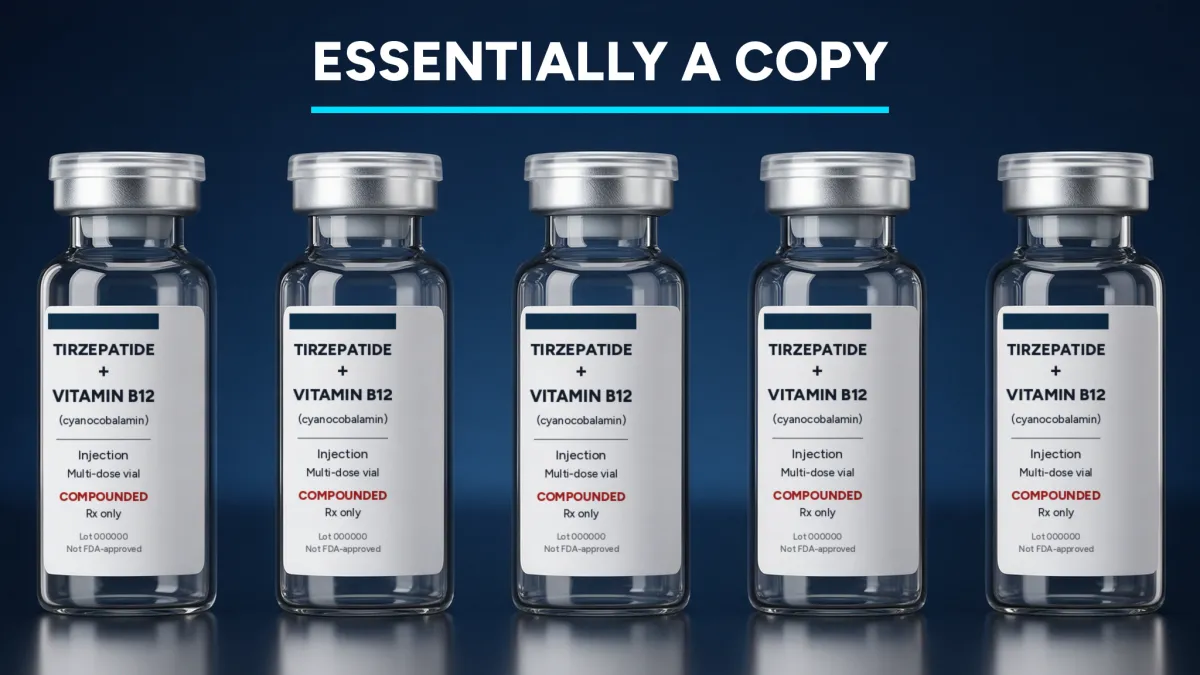
The FDA’s position is that these products are “essentially copies” of FDA-approved drugs, and that Empower was making them “regularly or in inordinate amounts.” Federal law does not allow a compounding pharmacy to do that. The agency also found that the sterile drugs coming out of the facility were made under conditions that “put patients at risk.”
Empower is not a back-room operation. It is one of the largest compounding pharmacies in the country and it ships to clinics, telehealth companies, and medspas nationwide. If you run a weight loss program in your medspa, there is a real chance these exact products are in your refrigerator right now.
That is the part of this story the industry does not want to hear. For three years, medspas have sold compounded semaglutide and tirzepatide as if “we get it from a licensed compounding pharmacy” settled every question. It never did. A licensed pharmacy is not an approved drug. This letter spells out the difference.
A note on sourcing. Everything below comes from the FDA’s letter and other public FDA documents, listed at the end. A warning letter records the FDA’s findings. It is not a court judgment, and Empower has the opportunity to respond.
What the FDA found
FDA investigators inspected Empower’s facility at 7601 North Sam Houston Parkway West from November 3 to November 14, 2025, and issued a Form 483 on the last day. Empower responded in December 2025 and again in March and April 2026. Ten months after the inspection, the FDA concluded the responses were not enough.
The letter makes two separate cases.
The first is about copies. Empower operates this facility as a state-licensed pharmacy under section 503A of the Federal Food, Drug, and Cosmetic Act. That section exempts compounded drugs from the FDA approval process, but only under conditions. One of them is that the pharmacy may not compound, regularly or in inordinate amounts, drugs that are essentially copies of a commercially available product. The FDA reviewed Empower’s monthly order counts for the three products from July through October 2025. The actual numbers are redacted in the public letter. The FDA’s conclusion: “The volume of products you are producing suggests that differences between products you are compounding and the FDA-approved products are pretextual.”
The second is about sterility. These are injectable drugs, and the FDA found that Empower “failed to perform adequate smoke studies under dynamic conditions to demonstrate unidirectional airflow within the ISO 5 area,” which is the critical zone where sterile product is exposed. The media fills, the test runs a facility uses to prove its staff and process can fill vials without contaminating them, “were not performed under the most challenging or stressful conditions.” When Empower submitted new media fill results in response, the FDA noted that the summary did not appear to match the number of vials inspected, and that results had been transcribed onto a new form because they were first recorded on the wrong one.
The FDA’s summary of what this means: drugs intended to be sterile were “prepared, packed, or held under insanitary conditions.” The agency told Empower to bring in a third-party consultant with sterile manufacturing expertise.
Empower has 15 working days from receipt to respond in writing. The letter warns that failure to address the violations “may result in legal action without further notice, including, without limitation, seizure and injunction.”
Compounding pharmacies chose a workaround that the FDA is no longer permitting
For several years, semaglutide and tirzepatide were on the FDA’s drug shortage list, and while they were, the FDA did not enforce the copy restriction against compounders. That shortage was over, as of March 5, 2025 for tirzepatide, and April 24, 2025 for semaglutide, for state-licensed pharmacies.
But demand remained high and the compounding industry did not stop. It added an ingredient. Semaglutide became semaglutide with B12. Tirzepatide became tirzepatide with niacinamide, or glycine, or B6. The theory was that a product with a second ingredient is no longer a copy of Ozempic, Wegovy, Mounjaro, or Zepbound.
The law does have an exception. A compounded drug is not a copy when, in the statute’s words as quoted in the letter, “there is a change, made for an identified individual patient, which produces for that patient a significant difference, as determined by the prescribing practitioner.” Read that carefully. An identified individual patient. A significant difference for that patient. Determined by the prescriber.
On April 1, 2026, the FDA told compounders in a public statement that it may consider a product combining semaglutide with another ingredient “such as vitamin B12 (cyanocobalamin), to be essentially a copy of a commercially available drug product.” In the same statement, the agency said it does not intend to act against a compounder that fills four or fewer prescriptions of such a product in a calendar month. Four. Although we don't know the exact number, that is a tiny fraction of what the compounding pharmacies have been producing.
The Empower letter is the beginning of enforcement.
Placing the onus on prescribers
The FDA did not only look at Empower’s clean rooms. It looked at the prescriptions. According to the letter, the evidence included orders “that lack any prescriber determination of significant difference from the commercially available product,” and orders with determinations “that appear to be repeated verbatim across many records, suggesting that they may be pre-generated for selection by the prescriber.”
The letter goes further and describes the mechanism: “third-party technology platforms that provide prescribers with pre-selected menu options for choosing a statement of significant difference.”
If you prescribe compounded GLP-1s, you know exactly what that is. It is the dropdown on the ordering portal. You click a box that says the patient needs B12 for energy or niacinamide for some stated benefit, and the order goes through. The FDA is saying that a clinical determination chosen from a menu, word for word the same in chart after chart, is not an individualized clinical determination. And the name on that determination is not the pharmacy’s. It is the prescriber’s.
This is not Empower’s first letter
The FDA’s warning letter database shows a long record for this company. In May 2017, the FDA warned Empower over sterile manufacturing deficiencies and over producing drugs without valid prescriptions for individually identified patients. In October 2021, a second letter went to its outsourcing facility. On April 2, 2025, the FDA issued two letters on the same day: one to Empower’s 503B outsourcing facility, and one to the same Sam Houston Parkway pharmacy at issue now.
That April 2025 pharmacy letter cited media fills that were not conducted “under the most challenging or stressful conditions.” Seven months later, FDA investigators walked back into the same building and wrote up media fills again. The 2025 letter to the outsourcing facility said, “Repeated failures demonstrate that executive management oversight and control over the manufacture of drugs is inadequate.”
This is the third warning letter Empower has received in under 18 months, and the fifth since 2017.
This is not one pharmacy. It is the business model.
It would be comfortable to treat this as Empower’s problem. It is not. The compounded GLP-1 market was built on volume: telehealth platforms, weight loss chains, and medspas ordering the same formulation for patient after patient, at a fraction of the brand price, with a vitamin added to keep the lawyers quiet. That is mass manufacturing of unapproved drugs under a pharmacy license, and the FDA has now said so in writing.
Medspas are in the middle of it. Many added GLP-1s as a revenue line with no weight management training, no real evaluation of the patient, and a medical director who has never seen a single chart. But this is not only a story about bad actors. But there are also many licensed doctors and nurse practitioners and PAs who genuinely know about weight loss and these drugs and how to prescribe them. They are truly life-saving for many people and have helped much of our population become healthier and fitter over the last few years.
However, often, well-meaning providers chose their supplier on price and never asked a single question about the facility behind the vial. Chasing the cheapest source is rampant in this industry, and it is how careful practices end up lumped in with the reckless ones.
The FDA has been plain about what compounded means: “Compounded drugs are not approved by FDA.” It's important to make this clear. Compounding pharmacies are regulated, and when a compounding pharmacy is state-licensed or FDA-registered, that describes the facility, not its drugs. No one at the agency has reviewed that vial for safety, effectiveness, or quality. When the facility cannot show that its sterile process works, the person carrying that risk is your patient, and the person who prescribed it is you.
What legitimate legal compliance looks like
It is totally legal to obtain compounded drugs from a state-licensed or FDA-registered facility. If your supplier is Empower, check your invoices against the three products in this letter: tirzepatide/niacinamide 17/2 mg/mL (4 mL), tirzepatide/niacinamide 8/2 mg/mL (2.5 mL), and semaglutide/cyanocobalamin 5/0.5 mg/mL (1 mL).
If your compounding pharmacy is not Empower, search the FDA’s records. The warning letter database and the Form 483 database are public and take five minutes. Search your pharmacy by name before you place another order. Then ask your pharmacy for its most recent inspection results and its sterility and potency testing for the lots you received.
A 503A pharmacy compounds for an identified individual patient based on a valid prescription. A box of unlabeled or generically labeled vials in the back for whoever walks in is not that.
503B outsourcing facilities, which can supply office stock for some drugs, are restricted from compounding from bulk substances that are neither on the FDA’s clinical need list nor in shortage. In its April 2026 statement the FDA noted that semaglutide and tirzepatide are on neither.
Make the prescription a real prescription. The patient is evaluated by someone with the legal authority to prescribe in your state: a physician, or an NP or PA acting within their scope and any required supervision or collaboration. An RN or an aesthetician handing out GLP-1s under a standing order, with no prescriber evaluating that patient, is practicing medicine without a license. So is a prescriber who signs off on patients he or she never assessed.
Document the clinical reason in your own words. If a patient needs a compounded product instead of the approved one, the chart should say why for that patient: a documented allergy to an excipient, a dose that is not commercially available and is clinically necessary. If your reason is a sentence the pharmacy’s portal wrote for you, the FDA has told you what it thinks of that. If your business model includes making an exception for every patient who walks in the door, it's time to reconsider that approach. The FDA is simply not buying it.
Tell patients what they are getting. A compounded GLP-1 is not Ozempic, Wegovy, Mounjaro, or Zepbound, and it is not a generic. It is not FDA-approved. Your consent form and your marketing should say so in plain words. If your website says “semaglutide” next to a photo of a brand-name pen, fix it.
Have a plan for the day your supplier stops shipping. A seizure or injunction against a large pharmacy would leave patients mid-titration with no product. Know now how you will move them to an FDA-approved drug or taper them safely.
And if the real math is that your weight loss program only works at compounded prices, with a checkbox for a clinical rationale, that is the answer. It is better to hear it from this letter than from your medical board.
What patients should ask
Is this the FDA-approved drug, or is it compounded? Which pharmacy made it? Can I see the vial and the label with my name on it? Look up the prescriber’s license. Look up the medical director’s too. If the answers are vague, leave.
Where MedSpa Board certification fits
No certification can make a compounding pharmacy validate its clean room. That is the FDA’s job, and in this case it did it. What certification does is make visible the practices that know what is in the vial, who made it, who prescribed it, and why.
If you run a medspa and your standards are ready to be verified, begin your application at medspaboard.com/certification-application. If you want to see where you stand first, download the free checklist at certification-checklist.
— Kate Dee, MD
Sources & further reading
U.S. Food and Drug Administration, Warning Letter to Empower Clinic Services, LLC dba Empower Pharmacy (738238), September 18, 2026. https://www.fda.gov/inspections-compliance-enforcement-and-criminal-investigations/warning-letters/empower-clinic-services-llc-dba-empower-pharmacy-738238-09182026
U.S. Food and Drug Administration, “FDA Clarifies Policies for Compounders; National GLP-1 Supply Begins to Stabilize,” April 1, 2026. https://www.fda.gov/drugs/drug-alerts-and-statements/fda-clarifies-policies-compounders-national-glp-1-supply-begins-stabilize
U.S. Food and Drug Administration, Warning Letter to Empower Clinic Services, LLC dba Empower Pharmacy (700964), April 2, 2025. https://www.fda.gov/inspections-compliance-enforcement-and-criminal-investigations/warning-letters/empower-clinic-services-llc-dba-empower-pharmacy-700964-04022025
U.S. Food and Drug Administration, Warning Letter to Empower Clinic Services, LLC dba Empower Pharma (700962), April 2, 2025. https://www.fda.gov/inspections-compliance-enforcement-and-criminal-investigations/warning-letters/empower-clinic-services-llc-dba-empower-pharma-700962-04022025
U.S. Food and Drug Administration, Warning Letter to Empower Clinic Services, LLC dba Empower Pharmacy (613792), October 15, 2021. https://www.fda.gov/inspections-compliance-enforcement-and-criminal-investigations/warning-letters/empower-clinic-services-llc-dba-empower-pharmacy-613792-10152021
U.S. Food and Drug Administration, Warning Letter to Empower Clinic Services, LLC (516718), May 25, 2017. https://www.fda.gov/inspections-compliance-enforcement-and-criminal-investigations/warning-letters/empower-clinic-services-llc-516718-05252017
Endpoints News, “Compounder Empower receives warning letter from FDA over GLP-1s,” September 22, 2026. https://endpoints.news/compounder-empower-receives-warning-letter-from-fda-over-glp-1s/
BioSpace, “FDA slams GLP-1 compounder over risk of contaminating drugs ‘with filth,’” September 24, 2026. https://www.biospace.com/drug-delivery/fda-slams-glp-1-compounder-over-risk-of-contaminating-drugs-with-filth
Frier Levitt, “FDA Warning Letter Targets Compounded GLP-1 Products,” September 2026. https://www.frierlevitt.com/articles/fda-warning-letter-compounded-glp-1-products/
Polsinelli, “Not Joking Around: FDA Offers Additional Clarification on Compounded GLP-1 Policy in April Fool’s Day Announcement,” April 2026. https://www.polsinelli.com/publications/fda-clarifies-compounded-glp-1-policy-april-fools-day-announcement